
Gregory Callimanopulos is a Greek shipping magnate with an estimated net worth in the range of $200 million to $500 million, based on his family's documented shipping empire, fleet ownership history, and philanthropic endowments. That range is wide by design: he is a private figure with no publicly traded holdings and no regulatory requirement to disclose personal wealth, so any number you see online is an inference, not a confirmed figure.
Gregory Callimanopulos Net Worth: Estimate, Sources, and How to Verify

Dimitri Papamichael
18 May 2026

Who Gregory Callimanopulos actually is (and clearing up the confusion)
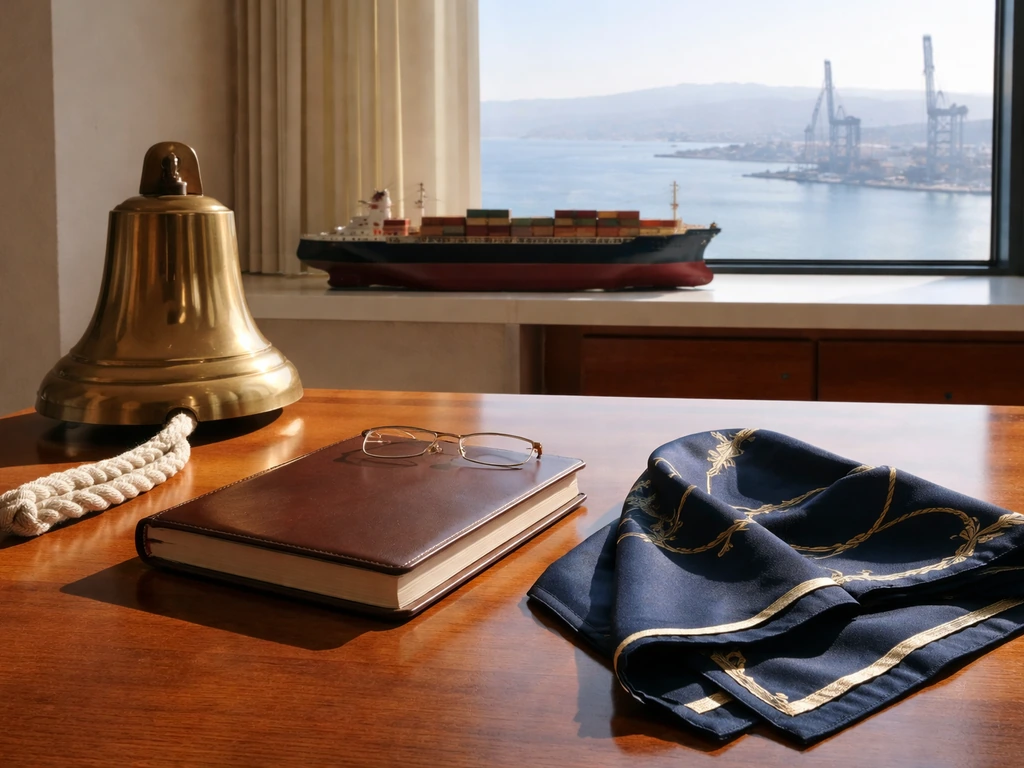
The Gregory Callimanopulos relevant to shipping and business wealth is the son of Pericles G. Callimanopulos, a foundational name in Greek maritime history. Gregory took over and expanded the family's operations, establishing a tramp shipping business out of New York and working to modernize the Hellenic Lines fleet. Lloyd's List, the authoritative shipping trade publication, profiled him under the headline 'Gregory Callimanopulos: the Hellenic lion,' a clear signal that this is a legitimately significant figure in Greek shipping, not a fringe name.
You will also encounter several spelling variants in English and Greek coverage: Callimanopoulos, Kallimanopulos, and in Greek press 'Γρηγόρης Καλλιμανόπουλος. ' These all refer to the same individual and family lineage. These spelling variants refer to the same individual and family lineage, as Lloyd's List also used in its coverage of Gregory Callimanopulos [spelling variants in English and Greek coverage](https://www. lloydslist.
com/LL000765/Gregory-Callimanopulos-the-Hellenic-lion). If you are researching and see slightly different transliterations, don't treat them as different people. The Greek press, including outlets like Dimokratia, have covered him specifically in connection with philanthropic work in the Achaea and Kalavryta regions, including the Kallimanopouleio geriatric facility, which adds another layer of public record to cross-reference his identity. Dimokratia has specifically linked Γρηγόρης Καλλιμανόπουλος to philanthropic work in Achaea and Kalavryta, including the [Kallimanopouleio geriatric facility](https://www.
dimokratia. gr/ellada/302528/to-parasimo-toy-ap-payloy-ston-efoplisti-gr/).
There is no major public figure of the same name in entertainment, politics, or sport who would create meaningful ambiguity here. If you landed on this page looking for a different Gregory Callimanopulos, the shipping magnate is almost certainly the person generating search interest.
The estimated net worth range today
Working from what is actually verifiable, a reasonable evidence-based estimate for Gregory Callimanopulos's net worth as of mid-2026 sits between $200 million and $500 million. Here is what drives that range:
- Greek shipping families operating tramp and bulk fleets at the scale associated with the Callimanopulos name typically control assets in the hundreds of millions of dollars. Fleet values alone, even for a mid-size operation, can run $50 million to $300 million depending on vessel types, tonnage, and market conditions at any given time.
- Philanthropic endowments of the scale he has funded, including institutional facilities named after the family, are not vanity projects for people with modest wealth. They are a cultural signal of significant accumulated capital in the Greek diaspora tradition.
- The family's New York base of operations during key decades of Greek shipping expansion (the 1960s through 1980s) placed them in the same generational wealth-building window as other prominent Greek shipping names who are now valued in similar or higher ranges.
- No confirmed bankruptcy, major asset liquidation, or public financial distress has been reported for this name in credible maritime or financial press, which supports the idea that the fortune remains substantially intact.
The lower end of that range ($200 million) accounts for the possibility that fleet assets have been partially wound down or sold off over time, as is common when shipping families transition across generations. The upper end ($500 million) reflects a scenario where diversified investments, real estate, and retained earnings from profitable shipping cycles have compounded the core maritime wealth. Neither end is a guess plucked from thin air, but neither is a confirmed audited figure.
How this wealth was most likely built
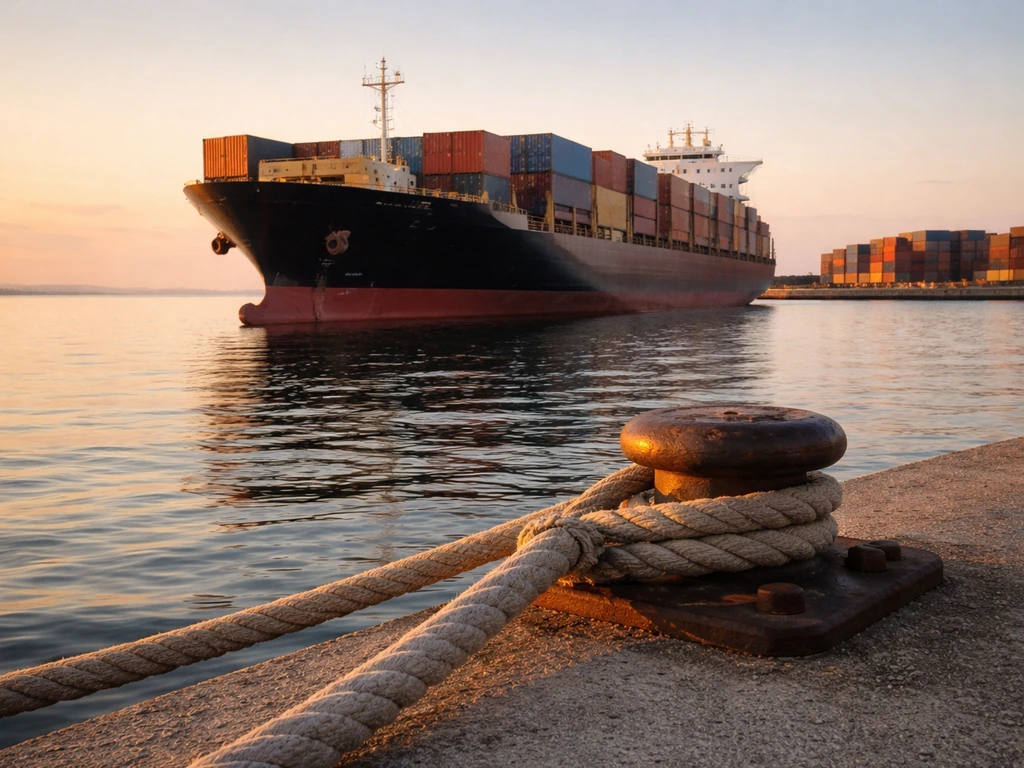
Shipping operations and fleet ownership
The foundation is shipping. Gregory's father Pericles established the Callimanopulos maritime presence, and Gregory expanded it through tramp shipping, a segment of the industry where vessels carry bulk cargo without fixed routes or schedules. Tramp shipping is cyclical and speculative, but for operators who time the market well, it can generate extraordinary returns during freight rate booms. The Greek shipping diaspora, operating largely out of London, New York, Piraeus, and Monaco, built multigenerational wealth precisely through this model. Gregory's documented role in modernizing Hellenic Lines operations points to a hands-on management style rather than passive inheritance.
Diversification and long-term capital allocation

Wealthy Greek shipowners of this generation rarely kept all their capital at sea. Real estate in New York, London, and Greece, along with financial market investments, are standard components of these portfolios. There is no specific public disclosure of Gregory's investment holdings outside shipping, but the pattern is consistent across the peer group, including figures like Constantine Gratsos, who managed Aristotle Onassis's affairs and represented the intersection of shipping wealth and diversified capital management.
Philanthropy as a wealth signal
The Kallimanopouleio geriatric facility in the Achaea region and charitable work connected to Kalavryta are not incidental details. In the Greek diaspora tradition, endowing institutions in one's home region is both a cultural obligation and a demonstration of sustained financial capacity. The scale of named institutional philanthropy typically correlates with net worths north of $100 million. It does not tell you the exact number, but it sets a meaningful floor. Similar estimates about Constantine Cleanthous net worth can vary widely depending on the sources used and how assets are valued constantinos cleanthous net worth.
Why the numbers vary so much depending on where you look
Net worth figures for private shipping magnates are notoriously inconsistent across websites, and Gregory Callimanopulos is no exception. Several methodological gaps explain the variation:
- No public filing requirement: Unlike publicly traded company executives, private shipowners have no legal obligation to disclose personal wealth. Estimates are extrapolated from vessel registrations, cargo contracts, and company incorporations, none of which cleanly translate to personal net worth.
- Fleet valuation is a moving target: Ship values fluctuate with steel prices, freight rates, vessel age, and global trade conditions. A fleet worth $300 million in 2008 might have been worth $120 million in 2016 and $250 million again by 2022. Sites that published a number in any given year may not have updated it.
- Spelling variant fragmentation: Because the name is transliterated multiple ways from Greek, web scraping tools and aggregator sites sometimes treat Callimanopulos, Callimanopoulos, and Kallimanopulos as different people, inflating or deflating individual estimates.
- Peer-group averaging: Some wealth estimation sites assign net worth figures based on industry peer averages rather than individual research. A Greek shipping magnate of a certain era simply gets a number in the 'few hundred million' range because that is what similar figures are worth, not because anyone counted his assets.
- Liability side is invisible: Net worth is assets minus liabilities. Shipping companies often carry substantial debt to finance vessel purchases. Without knowing the debt load, any asset-side estimate overstates true net worth.
This is not unique to Callimanopulos. You will find the same methodological gaps when researching other Greek shipping and business figures. The honest answer is that published figures are informed estimates with wide error bars, not audited balance sheets.
How to actually verify or sanity-check the estimate
If you want to stress-test any number you have seen, here are the practical records and sources worth checking:
| Source / Record Type | What It Can Tell You | Where to Find It |
|---|---|---|
| Lloyd's Register / Equasis vessel database | Vessels registered to Callimanopulos-connected entities, which you can value using current market rates | equasis.org (free) or Lloyd's List Intelligence (subscription) |
| US corporate filings (Delaware, New York) | Entity names, registered agents, and sometimes officer names for US-based holding companies | Delaware Division of Corporations, NY Secretary of State |
| Greek shipping registers (Piraeus) | Flag-state registration of vessels under Greek or related flags | Hellenic Shipping Ministry / Lloyd's List |
| Greek court and property records | Real estate holdings and philanthropic trust structures in Greece | Greek Cadastre (ktimatologio.gr) for property; Greek Ministry of Justice for foundations |
| Philanthropic foundation filings | Named foundations may file public accounts in Greece, which can indicate the scale of endowed capital | Greek General Commercial Registry (GEMI) |
| Industry press archives | Fleet size, transaction history, and business milestones cited in contemporaneous reporting | Lloyd's List, TradeWinds, Naftiliaki archives |
The most practical sanity check is vessel valuation. If you can identify vessels historically or currently associated with his companies, cross-reference their deadweight tonnage and age against current second-hand ship market prices published by brokers like Clarkson Research or BRS Group. Multiply by the number of vessels and you get a rough asset-side floor. Discount by 30 to 40 percent for typical debt levels and you get a conservative net worth approximation. It is not perfect, but it is grounded in real market data rather than aggregator guesswork.
Net worth vs. income vs. assets: what the numbers actually mean here
When you see a net worth figure for someone like Gregory Callimanopulos, it is important to understand what that number is and is not. Net worth is a snapshot of total assets minus total liabilities at a given moment. For a shipowner, the dominant assets are vessels (valued at current market prices), cash and equivalents, real estate, and investment portfolios. The dominant liabilities are ship mortgages and any corporate debt. The number can swing dramatically year to year based on freight market cycles, and it tells you nothing directly about annual income.
Annual income for a shipping magnate comes from freight revenue, charter hire, and returns on financial investments. In strong freight years, a mid-size tramp fleet might generate $20 million to $80 million in gross revenue, with net operating income depending heavily on fuel costs, crew expenses, and port fees. In weak years, the same fleet might barely break even. This volatility is why Greek shipowners have historically diversified into real estate and financial markets: to smooth income against the shipping cycle.
Going forward, the Callimanopulos wealth picture will be shaped by three factors: the state of the global shipping market (which as of 2026 remains healthy but cyclically uncertain), generational succession and how the family structure evolves, and any new philanthropic or investment disclosures that surface in Greek or international press. If the family follows the pattern of similar Greek shipping dynasties, the wealth is likely to be preserved and diversified over time rather than liquidated, which supports the upper end of the estimate range remaining plausible for the foreseeable future.
How Callimanopulos compares to other Greek shipping and business wealth
For context, the Greek shipping diaspora produced a wide range of fortunes across the 20th century. Figures like Constantine Gratsos operated at the very peak of that world, managing Onassis-level capital. Some searches also connect this wider Greek shipping-wealth world to Constantine Gratsos, but his net worth depends on which sources and valuation methods you use.
Others built solid, multi-generational businesses in the $200 million to $800 million range that never attracted the same headlines but represent genuinely significant wealth by any measure. Constantine Iordanou is also discussed in connection with Greek shipping wealth, so comparisons to his net worth can help interpret why estimates differ across sources Constantine Iordanou net worth.
Gregory Callimanopulos sits comfortably in that second tier, respected within the industry as a 'Hellenic lion' per Lloyd's List, but not a household name outside shipping circles. If you are comparing fortunes in this same Greek shipping tier, you may also want to look at Constantine Karpidas net worth as another adjacent example of how public estimates can diverge Constantine Gratsos. You can use the same approach to sanity-check Constantine Karpidas net worth by looking at publicly reported assets, shipping exposure, and corroborating sources.
That is actually the norm for Greek maritime wealth: private, understated, and built over decades rather than through a single high-profile event. If you are comparing other Greek shipping fortunes, you may also want to look at peter constantinides net worth as a related point of reference. Peter Constantinides net worth is often estimated using similar approaches, since these figures are typically based on verifiable asset signals rather than audited disclosures.
If you are researching this space more broadly, the peer group of Greek-origin business figures from the same generational and regional window, including families based out of New York and London in the post-war decades, shows a consistent pattern of wealth in the low to mid hundreds of millions, sometimes exceeding a billion when commodity or real estate timing worked in their favor. Callimanopulos fits that pattern cleanly. Some readers also search for Constantine Yankoglu net worth, so it helps to treat any numbers online as estimates until you can verify the underlying assets and sources. In some searches, people also connect this broader net-worth discussion with Prince Constantine Alexios, but public details remain limited and vary by source.
FAQ
How can I tell whether a net worth website is using the same Gregory Callimanopulos as the Greek shipowner?
First, match identity anchors, not just the name, use known Greek spellings (for example, Γρηγόρης Καλλιμανόπουλος) and look for links to Hellenic Lines, tramp shipping, or the Kallimanopouleio geriatric facility. If the page claims entertainment, politics, or sport connections without shipping-specific context, treat it as likely misidentification.
Why do net worth estimates for Callimanopulos vary so widely, even when they cite similar sources?
Most variance comes from how they value ships (newbuild vs second-hand market, and whether they use broker asking prices or actual deal comps) and how they estimate debt and off-balance-sheet obligations. Even a small change in ship market price assumptions can swing a total by tens or hundreds of millions because fleet value is the dominant asset.
Can I verify the lower end or upper end of the $200 million to $500 million range with a quick calculation?
Yes, do a rough vessel valuation floor by identifying vessels historically tied to his companies, using deadweight tonnage and age, then applying current second-hand market pricing ranges. Discount that total by a realistic debt haircut (the article suggests 30 to 40 percent) and compare the result to the claimed net worth. If the estimate is far above your discounted asset-side floor without explaining financing, it is likely inflated.
Do net worth numbers for shipping magnates correspond to their annual income?
Not reliably. Net worth is a balance sheet snapshot that moves with freight cycles because ship values and leverage change, income is driven by charter rates, freight revenue, operating costs, and investment returns. A year with strong earnings can still show flat net worth if assets are sold, reinvested, or debt changes.
Why might philanthropy details help confirm identity, but not improve precision of net worth?
Philanthropy can corroborate that the subject is the same person or family, but the scale of giving can be influenced by endowment structure, timing of donations, and whether assets are held in trusts or foundations. So it can suggest a meaningful wealth floor, while the net worth ceiling still depends on asset valuation and liabilities.
What debt or corporate structure issues can make shipowner net worth estimates misleading?
Shipping groups often use multiple vessel-owning entities, joint ventures, or partially held subsidiaries, which can obscure total liabilities when estimates rely on public or partial information. Also, mortgages can be refinanced during different freight cycles, changing the effective debt load versus what an older valuation assumes.
If I find conflicting spelling variants like Callimanopoulos and Callimanopulos, how should I handle that research?
Treat transliteration variants as the same family unless there is independent evidence of a different biography. Use cross-checks like the same father’s name, consistent shipping company references, and Greek press mentions tied to specific facilities or regions rather than relying on spelling alone.
What is a sensible “next step” if I want to update an estimate as of 2026 or later?
Re-run the vessel valuation method using updated market prices and any known fleet changes, then adjust for debt and operational leverage if you can find refinancing or sale activity. If new Greek or international press reports surface about investment holdings or governance roles, incorporate those into the asset and liability assumptions before changing the net worth range.
Next Article
Constantine Yankoglu Net Worth: Estimate, Sources, and How to Verify
Estimated Constantine Yankoglu net worth and practical steps to verify signals, sources, and confidence levels.