
Based on the most recent available balance sheet data for Olympiacos FC's Greek legal entity, the club's book equity (assets minus liabilities) sits at approximately €37.9 million, with total assets of around €123.5 million and annual turnover near €67 million. That is the closest thing to a formal "net worth" figure for the football club itself. A broader enterprise-value or market-valuation estimate, factoring in brand, squad value, and multi-year commercial deals, would put the club in a higher range, likely somewhere between €100 million and €200 million depending on methodology, but that number is not publicly confirmed and requires careful interpretation.
Olympiacos FC Net Worth: Club Valuation Estimate Guide

Dimitri Papamichael
17 Jun 2026
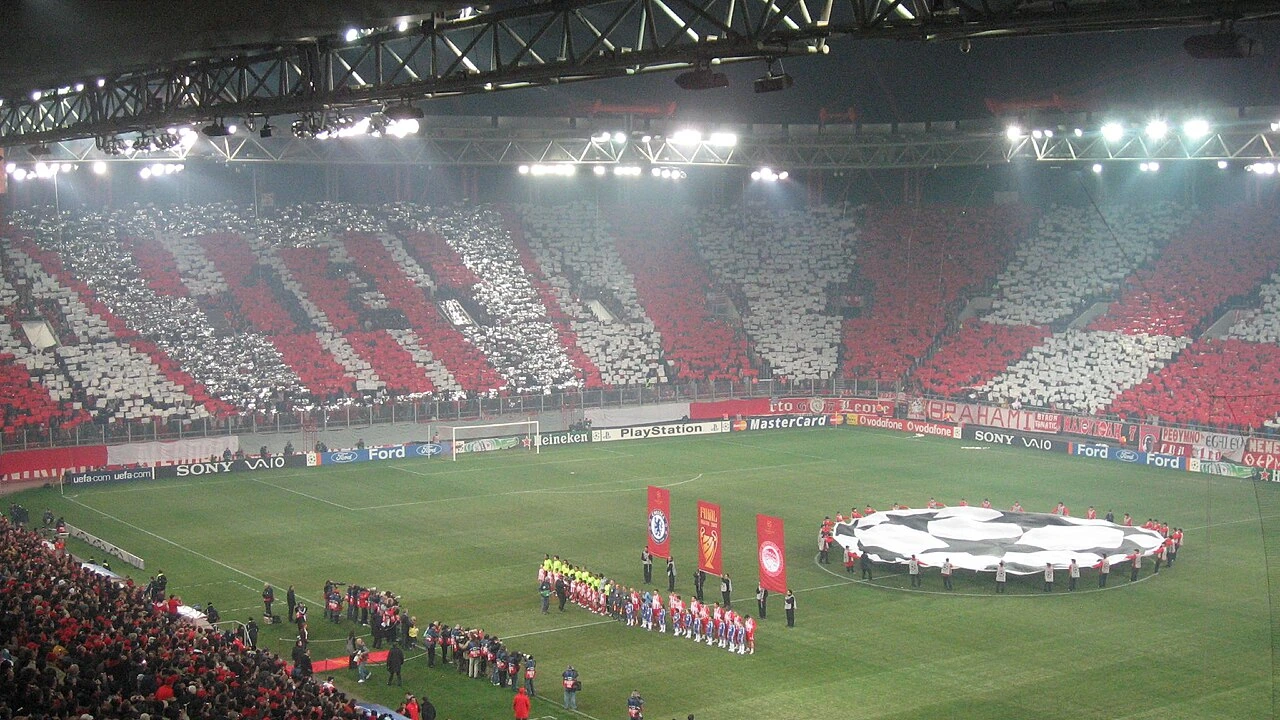
What "net worth" actually means for a football club like Olympiacos

When people search for Olympiacos FC net worth, they are usually looking for one number that captures how much the club is "worth." The problem is that there is no single agreed metric, and the word "net worth" means different things depending on who is using it. Ice Poseidon net worth is another “single-number” claim, but it usually depends on whether you mean cash, business value, or liabilities, not one audited figure. For a football club, the most defensible interpretation is book equity: the value left over on the balance sheet after you subtract total liabilities from total assets. This is the equity figure reported in the club's audited annual accounts, filed under its legal entity in Greece. It reflects the accumulated financial position of the club as a business, not a market valuation, and not the personal wealth of its owner.
UEFA's Club Licensing and Financial Sustainability framework, which governs all clubs competing in European competition, reinforces this interpretation. UEFA builds its compliance checks around audited financial statements for the specific legal entity, not around brand estimates or owner wealth. So when you see a headline claiming Olympiacos is "worth" some large number, you need to ask: is that book equity from filed accounts, an enterprise-value estimate (equity plus net debt), a squad market value, or simply someone attributing the owner's personal fortune to the club? Each of those will produce a very different figure.
What goes into a proper club valuation
A thorough valuation of Olympiacos FC would include several distinct layers of financial data. Understanding what is and is not included in any estimate you read is essential for interpreting it correctly.
- Balance sheet equity: total assets minus total liabilities as reported in the club's legal-entity accounts (the €37.9M figure from recent filings is the baseline here)
- Squad and player registration values: the amortized book value of player contracts, which is an asset on the balance sheet but may differ significantly from current market transfer values
- Stadium and infrastructure: Olympiacos plays at Georgios Karaiskakis Stadium; its ownership or lease structure affects whether real-estate value appears as an asset
- Annual revenue (turnover): approximately €67M per recent filings, covering matchday income, broadcasting rights, UEFA distributions, and commercial/sponsorship deals
- Gross debt and net debt: bank loans, related-party loans, and other financial liabilities that reduce equity; these must be identified to get from enterprise value to equity value
- Employee payables and overdue obligations: UEFA's regulations specifically flag wages, bonuses, image-right payments, and other contracted benefits as monitored liabilities
- Transfer fee payables and receivables: instalments owed to or from other clubs for past transfers, which affect working capital and net debt
- Commercial contract pipeline: multi-year sponsorship deals (such as the Stoiximan major sponsorship extended to 2028) carry future cash-flow value that pure book equity does not fully capture
Current best estimate: Olympiacos FC financial snapshot

The most concrete data available for Olympiacos FC as of mid-2026 comes from the Greek legal entity filed accounts and aggregator platforms that surface those filings. The entity is formally registered as OLYMPIAKOS SYNDESMOS FILATHLON PEIRAIOS PODOSFAIRIKI ANONYMI ETAIRIA OLYMPIACOS F.C. The key headline figures from the most recently available filing period are summarized below.
| Metric | Figure | Notes |
|---|---|---|
| Book equity (net worth) | ~€37.9M | Assets minus liabilities from legal entity balance sheet |
| Total assets | ~€123.5M | Includes player registrations, fixed assets, receivables |
| Annual turnover (revenue) | ~€67.1M | Operational revenue for the reported period |
| Net result (profit/loss) | ~€1.46M | Marginal profitability in the reported period |
| Enterprise value estimate (indicative) | €100M – €200M | Broad estimate; not publicly confirmed, methodology-dependent |
| Major sponsorship horizon | Through 2028 | Stoiximan deal provides multi-year commercial visibility |
The gap between book equity (€37.9M) and the broader enterprise-value range reflects several factors: squad market values that exceed their amortized book figures, the commercial value of UEFA competition participation, brand recognition, and the multi-year sponsorship pipeline. External aggregators such as Dun & Bradstreet have cited sales revenue figures around $120M for the entity, but those numbers are modelled estimates rather than directly auditable statements, so treat them as a cross-reference rather than a primary source.
What actually drives the club's valuation
Revenue and broadcasting
Olympiacos's roughly €67M turnover is anchored by a combination of domestic broadcasting distributions from the Greek Super League, UEFA competition prize money and co-efficient payments, matchday revenues at Karaiskakis Stadium, and commercial partnerships. UEFA distributions can swing significantly year to year depending on how deep the club goes in European competition, which makes revenue volatile compared to, say, a Premier League club with a fixed large TV deal. A good Europa League or Conference League run can add several million euros in a single season.
Wages and squad costs

UEFA's financial sustainability regulations, which apply directly to Olympiacos as a UEFA licence holder, set a progressive squad cost ratio ceiling moving toward a permanent 70% cap from the 2025/26 season onward. Squad costs include gross wages, salaries, bonuses, image-right payments, benefits-in-kind, and long-term employee benefits. UEFA’s blank" rel="noopener noreferrer">squad-cost and wage/employment methodology is detailed in its Club Licensing and Financial Sustainability regulations, which are the same type of documents researchers use to normalize wage numbers for comparability across clubs. Keeping wages within that 70% ceiling is critical not just for UEFA compliance but for valuation purposes: a club running above the ceiling faces fines, competition restrictions, and the prospect of a shrinking equity base, all of which suppress valuation multiples.
Transfer activity
Transfer economics are a two-edged driver of Olympiacos's valuation. Selling a key player at a profit can generate a one-time book gain that temporarily boosts equity and looks like income, but it also reduces squad market value. Under UEFA's financial sustainability rules, player registration costs and amortization are treated as relevant expenses in a specific way, so transfer profit recognition in the accounts may differ from headline transfer fee announcements. For valuation purposes, the net cumulative transfer position (cash received from sales minus cash paid for purchases, net of instalments) matters more than any single deal.
Sponsorship and commercial income
The extended Stoiximan partnership through 2028 is a meaningful valuation signal. Multi-year major sponsorships provide revenue visibility that analysts and investors price positively: they reduce downside risk in commercial income lines and give the club a more predictable cash-flow base. As Olympiacos continues building its European profile following the Conference League success in 2024, sponsorship and commercial income will likely increase relative to the historical base.
Debt, liabilities, and the Marinakis ownership factor
With total assets around €123.5M and book equity near €37.9M, the implied total liabilities are approximately €85.6M. That is a substantial liability load relative to equity, and it is the most important thing to interrogate when interpreting the club's net worth. The key questions are: how much of that is financial debt (bank loans, bonds), how much is operational (transfer payables, trade creditors, deferred income), and crucially, how much is related-party debt from the ownership structure.
Evangelos Marinakis has been the principal shareholder and President of Olympiacos FC since around 2010. Ally Ioannides net worth figures are often discussed in similar terms, but they are separate from the club-level balance sheet view used for Olympiacos FC. He is also associated with Nottingham Forest and Olympiacos Piraeus in multiple sports. Ownership structures like this often involve related-party loans or capital injections where the shareholder funds the club directly rather than through external banks. Such loans may be subordinated, interest-free, or convertible, which affects how they should be treated in an equity valuation. If Marinakis's personal loans to the club are reclassified as equity-like instruments, book equity could look materially different. Always check the notes to the accounts, not just the headline balance sheet, to understand debt structure.
UEFA's Article 72 on overdue payables in respect of employees is also relevant here. Any wages, bonuses, or contracted benefits that are overdue (unpaid past their due date) must be reported and can result in UEFA licence sanctions. For valuation purposes, overdue payables are a red flag that can signal cash-flow stress and should be deducted at full face value when calculating a realistic equity estimate.
How to find and verify the numbers yourself today

If you want to update or verify the Olympiacos FC net worth estimate right now, here is a practical workflow that takes you from zero to a defensible figure in a few steps. If you see a claim about Leonidas Gulaptis net worth, treat it as separate from the club’s audited financial equity unless the source explicitly ties it to the football legal entity’s filings.
- Confirm the legal entity: The full entity name is OLYMPIAKOS SYNDESMOS FILATHLON PEIRAIOS PODOSFAIRIKI ANONYMI ETAIRIA OLYMPIACOS F.C. Searching this name in the Greek General Commercial Registry (GEMI, gemi.gov.gr) will surface the officially filed annual accounts.
- Use Fundamenta as a quick pointer: Fundamenta's company page for the entity surfaces headline figures (equity, total assets, turnover, net result) quickly. Use it to identify the most recent filing period and check the figures before going to the primary GEMI source.
- Pull the full audited accounts from GEMI: The notes to the accounts are where you find gross debt breakdown, related-party loan terms, deferred income, and any overdue payables. These details are invisible in aggregator summaries but essential for accuracy.
- Cross-check revenue and wage benchmarks with UEFA data: UEFA's European Club Finance and Investment Landscape (ECFIL) portal publishes club-by-club revenue, wage, and transfer-fee comparisons for UEFA-participating clubs. Use this to sanity-check whether Olympiacos's reported figures are consistent with peer clubs of similar size and competition level.
- Apply a revenue multiple as a cross-check: Small-to-mid-tier European clubs typically trade at 1x to 3x annual revenue in private transactions. With Olympiacos's ~€67M revenue, that implies a rough enterprise value range of €67M to €200M. Compare this to your bottom-up equity calculation to see if they are in the same ballpark.
- Adjust for net debt: Subtract net financial debt (gross debt minus cash) from your enterprise-value estimate to arrive at an equity-equivalent figure. If the GEMI accounts show, say, €50M in financial debt and €10M in cash, net debt is €40M and that reduces your enterprise value estimate accordingly.
- Check for any public announcements: Olympiacos's official site (olympiacos.org), UEFA's club licensing portal, and Greek financial press (e.g., Capital.gr, Naftemporiki) occasionally report specific financial developments, debt restructurings, or investment rounds that alter the balance sheet picture significantly.
Clearing up the confusion: Olympiacos vs Olympiacos FC, and what the number really represents
There are two distinct confusions that come up almost every time someone searches for an Olympiacos net worth figure, and both lead to misleading numbers if you do not sort them out first.
The first confusion is Olympiacos FC versus the broader Olympiacos CFP multi-sport organization. Olympiacos is a multi-sport club that includes football, basketball (one of Europe's strongest programs), water polo, rowing, and other disciplines. The financial statements for the football legal entity (PAE Olympiacos FC) cover only the football operation. Any estimate that aggregates the football club's value with the basketball section's assets, the broader brand, or non-football revenues will produce a different and larger number. That is not wrong necessarily, but it is not the football club's net worth in isolation.
The second confusion is club net worth versus owner net worth. Evangelos Marinakis is a Greek shipping magnate with a personal fortune estimated in the hundreds of millions of euros, connected to shipping businesses, media assets in Greece, and football club ownership across multiple clubs. Some web pages or search results conflate his personal wealth with "Olympiacos net worth," which produces a dramatically inflated and misleading figure. The club's book equity of approximately €37. blank" rel="noopener noreferrer">Fundam(h)enta’s company page for Olympiacos F.C. surfaces the Greek legal-entity filings for this entity and provides at-a-glance balance-sheet items alongside the book-equity view. 9M has nothing to do with Marinakis's personal fortune. They are completely separate financial entities, even if his investment decisions shape the club's financial trajectory significantly. This same distinction applies when looking at other Greek business and sports figures: the individual's personal wealth and the organization they lead are always distinct calculations, a principle that runs through how this site approaches any Greek athlete, business leader, or club.
A third, smaller confusion involves accounting population: some external databases aggregate consolidated group figures if Olympiacos FC has subsidiaries or related entities, while others report only the single legal entity. Consolidated accounts will include more assets and potentially more liabilities. If two sources give you different equity figures for "Olympiacos FC," this scope difference is often the explanation.
What could move this number going forward
The €37.9M book equity baseline is a snapshot, not a fixed number. Several factors could push it meaningfully higher or lower over the next one to three years. A sustained run in UEFA competition (Conference League defense, or a Europa League campaign) would add prize money and co-efficient payments directly to revenue, improving operating profit and thus equity. Conversely, a failure to qualify for Europe at all would reduce that income line significantly given how volatile it is for Greek clubs. The Stoiximan sponsorship commitment to 2028 provides some stability on the commercial side regardless of European performance.
Player sales at values above book amortization generate transfer profit that feeds directly into the profit and loss statement and lifts equity. A single high-value sale can add €5M to €20M to book equity in one year. Debt restructuring, particularly if related-party loans are converted to equity, would also increase book equity without any change in operating performance. On the downside, wage inflation above the UEFA squad cost ceiling, any overdue payable sanctions, or a costly transfer splurge with poor results would erode the equity position. Tracking the annual GEMI filing each year and benchmarking it against UEFA's club finance data is the most reliable way to keep the estimate current. UEFA’s European Club Finance and Investment Landscape (ECFIL) portal and related UEFA Intelligence Centre datasets can provide valuation-input datasets such as revenues, wages, and transfer-fee related data across many UEFA clubs UEFA's club finance data.
FAQ
Why do different websites give wildly different “Olympiacos FC net worth” numbers?
A good quick test is to look for the exact metric named in the claim. If it says “book value,” “equity,” or “net assets,” it is closest to the audited balance sheet approach (assets minus liabilities). If it says “market value,” “enterprise value,” or “club worth,” it usually blends debt, brand, and forward-looking income assumptions, which will not match the UEFA licensing view.
Does UEFA squad cost compliance actually affect Olympiacos FC net worth, or is it only a sporting issue?
UEFA squad cost ratio rules can indirectly change valuation because they constrain how much of revenue can be converted into wage and related costs. If the club is consistently above the allowable ceiling, it can trigger sanctions, which typically compresses the equity multiple buyers or analysts are willing to apply.
How can I tell whether Olympiacos FC liabilities are mostly “real debt” or shareholder-style funding?
To distinguish equity-like funding from true liabilities, review the notes section for related-party loans (owner or group entities), see whether they are subordinated, interest-free, convertible, or repayable on short timelines. Such terms can make the “economic” risk lower than bank-style debt, even if both appear as liabilities on the headline balance sheet.
If Olympiacos sells a star, does the net worth increase immediately and by the full transfer fee?
The club may appear to have “net worth” improvements after a player sale at a high headline fee, but the accounting boost depends on book amortization and installment structure. For a realistic equity view, check transfer profit timing in the income statement and the cash impact in the year, not only the reported transfer price.
What happens to a net worth estimate if Olympiacos has overdue wage or staff payables?
Yes. Overdue payables tied to employees (wages, bonuses, contracted benefits) can lead to UEFA license consequences. For valuation-like calculations, overdue items are a cash-flow stress indicator, and treating them as fully payable at face value is usually more conservative than assuming they will be paid out over time.
Should I use consolidated group accounts or the football legal entity when calculating Olympiacos FC net worth?
If Olympiacos FC has subsidiaries or related entities, consolidated accounts can show different assets and liabilities than the standalone legal entity. Make sure the figure you compare is explicitly tied to the football PAE (Olympiacos FC) entity, not the broader group or multi-sport umbrella.
Are owner net worth estimates (Evangelos Marinakis) ever the same thing as Olympiacos FC net worth?
No, those numbers are not automatically comparable because one is owner personal wealth and the other is a club’s balance sheet equity. Even when the same person funds the club, personal net worth estimates usually include unrelated business assets, while club net worth is limited to the legal entity’s assets and liabilities.
What is the simplest way to update an Olympiacos FC net worth estimate without getting misled by old data?
A defensible “equity baseline” is updated by checking the newest GEMI filing and comparing year over year changes in equity, net debt, and any reclassification of related-party funding. If you only rely on a single snapshot or an aggregator estimate, you can miss structural changes that alter liabilities or cash generation.
Why doesn’t squad market value match the club’s book equity?
The fair-market price of the squad and contract valuations can diverge from accounting figures because football assets are amortized over contract terms. If a report quotes squad market value, treat it as a separate layer from book equity, and expect the “club worth” total to move differently than audited equity.
Can Olympiacos FC have a decent balance-sheet equity but still be in financial trouble?
Not always. A healthy equity figure can still coexist with cash-flow pressure if liabilities are payable soon, such as transfer payables or deferred income mismatches. For a more realistic outlook, also look at the age and classification of payables in the notes, not just total liabilities versus equity.
Next Article
Leonidas Gulaptis Net Worth Estimate and How It’s Calculated
Estimate Leonidas Gulaptis net worth with a transparent method, income drivers, asset risks, and verification tips.