
Basil Papachristidis is a Greek-diaspora shipping executive best known as a former Chairman of the Hellespont Group and current CEO of Thalatta Maritime Pte Ltd, based in Hamburg, Germany. No publicly verified, audited net worth figure exists for him as of June 2026. Based on his documented corporate leadership roles, the operational scale of the businesses he has led (including a fleet history of 133 vessels and $2.3 billion in financings), and the broader context of Greek shipping family wealth, a reasonable working estimate places his personal net worth somewhere in the range of $50 million to $300 million, with low-to-medium confidence. If you are looking specifically for Basil Papachristidis net worth, this range is the best-supported estimate available as of June 2026, but it depends on which family member a given source is actually referring to. That wide range reflects genuine data gaps, not guesswork, and this article explains exactly what we know, what we don't, and how you can narrow it further.
Basil Papachristidis Net Worth Estimate and How to Verify


Who exactly is Basil Papachristidis?

This is actually the most important question to settle before talking about money, because the name creates real confusion in public sources. The person this article focuses on is Dr Basil Ph. Papachristidis, born November 14, 1944, educated at McGill University and Columbia University. Bayes Business School’s panelist profile for Dr Basil Papachristidis describes him as Chairman of Thalatta Maritime Pte Ltd and notes he was born November 14, 1944, educated at McGill and Columbia University, and currently resides in Hamburg, Germany. He is a Hamburg-based shipping executive who served as Chairman of the Hellespont Group, one of the better-known Greek shipping conglomerates, and currently holds the CEO role at Thalatta Maritime Pte Ltd (a Singapore-incorporated company with operational leadership in Hamburg).
The confusion worth flagging immediately: there is also a 'Phrixos Basil Papachristidis' who appears in German business registry records connected to entities like Helios Ship Management GmbH & Co. KG. Maritime Executive's coverage of Hellespont's three-generation leadership history further shows the Papachristidis family shipping legacy started in 1946, with 'Phrixos B. Papachristidis' named as a founding generation figure. The name 'Basil Phrixos Papachristidis' also appears in a 2008 Greek Shipping Awards publication. So the family includes multiple prominent figures whose names overlap. When you see a net worth figure attributed to 'Basil Papachristidis' on an aggregator site, it is genuinely unclear which family member they mean, and conflation is common. When people search for Stavros Papastavrou’s money source and net worth, make sure you’re not mixing it with the Basil Papachristidis family name found in shipping records net worth figure.
Dr Basil Ph. Papachristidis was elected Chairman of INTERTANKO (the International Association of Independent Tanker Owners) in June 1987 and served through 1989, a period defined by the so-called Tanker War in the Gulf. That role is a useful identity anchor: INTERTANKO chairmanship is a credible, documented position in maritime industry records, and it places him firmly in the top tier of Greek tanker shipping leadership during that era.
What 'net worth' actually means here
Net worth is assets minus liabilities. For a private shipping executive like Papachristidis, those assets typically include equity stakes in operating companies (ships, ship management firms, project development vehicles), liquid financial assets (cash, bonds, equities), real estate, and any other investments. Liabilities include debt on those assets, personal guarantees, and other obligations. The tricky part with private maritime figures is that almost none of these values are publicly disclosed. Ship-owning companies are often structured through holding entities across multiple jurisdictions, with valuations tied to vessel markets that fluctuate with global trade cycles. What looked like $200 million in ship equity in 2008 might have been worth $80 million by 2012 and back up again by 2022.
The IFRS framework that underpins financial reporting distinguishes between book value (what assets cost originally) and fair value (what they'd fetch today). For Greek shipping families, that gap can be enormous. A fleet acquired in a down market and held for decades can have a book value a fraction of its market worth. This is why raw balance-sheet figures, even when available, require adjustment before they mean anything as a personal wealth estimate.
The estimated net worth range, and what confidence to place in it

Working from what is publicly available, a defensible range for Dr Basil Ph. Papachristidis's personal net worth as of June 2026 is approximately $50 million to $300 million. The confidence level on that range is low-to-medium. Here is what anchors it and what limits it.
| Factor | What it suggests | Confidence |
|---|---|---|
| Hellespont Group chairmanship (historical) | Top leadership of a multi-ship, multi-sector group implies significant equity participation over decades | Medium |
| INTERTANKO chairmanship 1987-1989 | Industry-level seniority consistent with high-value operator, not a salaried manager | Medium |
| Thalatta Maritime operational history (133 vessels, $2.3B financings) | Business at this scale implies meaningful equity; personal share unknown | Low |
| Thalatta transition to project development (2020s) | Suggests a liquidity event or shift in how wealth is held; could mean cash/investments vs. ship equity | Low |
| No audited financials, ownership %, or property records found | Hard floor and ceiling cannot be set with precision | N/A |
The $50 million floor reflects the minimum plausible accumulated wealth for someone who has led organizations at this scale across four-plus decades. The $300 million ceiling is a conservative upper bound given the scale of businesses involved, while stopping well short of the billion-dollar figures sometimes associated with top-tier Greek shipping dynasties. Without knowing his ownership percentage in Hellespont or Thalatta, or what was received at any sale or restructuring, any tighter range would be misleading.
Where the wealth likely comes from
Hellespont Group equity and distributions

The Hellespont Group was a substantial Greek shipping conglomerate. Papachristidis served as its Chairman, and given the family ownership structure typical of Greek shipping enterprises, this almost certainly involved equity rather than just a management role. The group operated across tankers and other shipping sectors. The accumulated value of dividends, asset sales, and retained equity from decades of Hellespont involvement is probably the single largest wealth driver, though the specific amounts are not in any public record this research located.
Thalatta Maritime
Thalatta Maritime Pte Ltd is incorporated in Singapore, with Papachristidis serving as CEO (and listed as Chairman in some sources, reflecting a dual or evolving role). The company's own experience page cites vessel ownership of 133 vessels and 10.9 million deadweight tonnes, plus debt and equity financings totaling $2.3 billion. These are cumulative figures representing the company's history, not a current fleet snapshot, but they establish the scale of capital that has moved through the business. In the 2020s, Thalatta transitioned from direct ship ownership toward marine project development, which typically means asset monetization and repositioning of proceeds into new ventures or liquid holdings.
German business interests
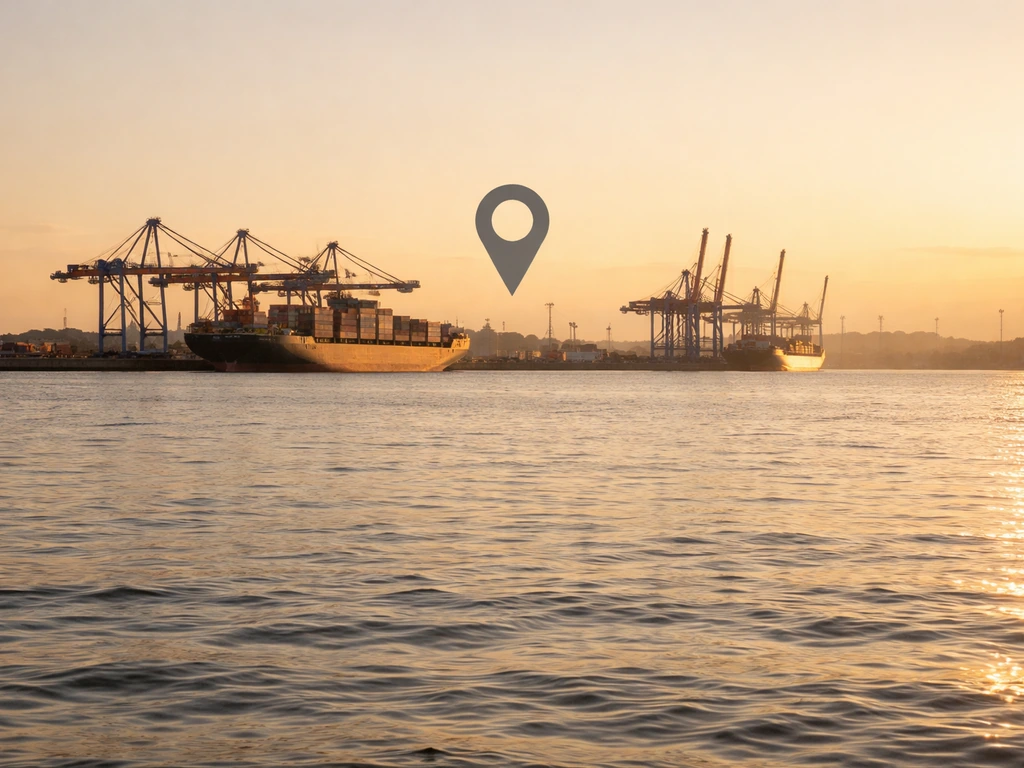
Hamburg has been a base for Greek shipping families for generations, and German company registry records show Papachristidis family connections to entities including Helios Ship Management GmbH & Co. KG. German GmbH & Co. KG structures are commonly used in shipping to hold vessel-owning KGs, and they do file accounts with the German commercial registry (Handelsregister). These filings can provide equity values and asset data, though extracting them requires a targeted search of the Handelsregister by entity name.
Financial assets and real estate
No property transaction records or investment portfolio disclosures were found for Papachristidis in this research pass. Given his Hamburg residency and career duration, real estate holdings in Germany and possibly Greece are plausible, but this is inference rather than evidence. Liquid financial assets from shipping distributions over the years are also a likely component of total wealth, but again, no data surfaces in public records.
How this estimate was built
The methodology here is transparent about what it is and isn't. This is a proxy-based estimate, not a forensic valuation. The process involved confirming identity through cross-referencing Bayes Business School panelist records, Thalatta Maritime's corporate team page, INTERTANKO historical records, and Maritime Executive industry coverage. Once identity was confirmed, business scale signals (fleet size, financing volume, leadership seniority) were used as proxies for potential wealth magnitude. These were then bounded against known patterns for Greek shipping executives at similar seniority levels. No audited financials, ownership percentages, compensation data, or property records were available in publicly accessible sources to provide hard numbers. If you are specifically looking for Stavros Papastavrou’s New York net worth, the same transparency problem applies, so estimates usually rely on indirect signals rather than disclosed holdings.
The key limitation is that private shipping wealth is genuinely opaque. Singapore private companies are not required to file detailed public accounts in the same way UK public companies are. German KG structures file accounts but require direct Handelsregister access to retrieve them. Without those filings, any specific number is more educated inference than verified fact.
Why different sources give different numbers
If you have seen a different figure for Basil Papachristidis's net worth elsewhere, there are a few likely explanations. First, name conflation: 'Basil Papachristidis,' 'Phrixos Basil Papachristidis,' 'Basil Phrixos Papachristidis,' and related names from the same family appear across different sources. Many aggregator sites do not distinguish between them and may be estimating the combined or wrong individual's wealth entirely. Second, valuation basis: aggregator sites often use revenue figures, fleet asset values, or group-level balance sheets without adjusting for individual ownership percentages, debt, or fair value vs. book value differences. Third, timing: shipping wealth fluctuates significantly with freight markets. For those searching for Basil Papachristidis net worth, this market-driven volatility is one reason reported figures can change over time wealth fluctuates significantly with freight markets. An estimate from 2008 or 2014 could be materially different from a 2026 figure. Fourth, the Thalatta transition: if the business shifted from direct ship ownership to project development in the 2020s, the composition and visible markers of wealth changed, and older estimates would not reflect that.
How to verify this and keep it updated

If you want to get closer to a defensible number, here is the practical verification workflow based on how Greek shipping wealth is actually traceable in public records.
- Search the Singapore Accounting and Corporate Regulatory Authority (ACRA) BizFile+ portal for Thalatta Maritime Pte Ltd to retrieve filed financial statements and director/shareholder disclosures. Singapore private companies file annual returns that include some ownership and financial data.
- Search the German Handelsregister (handelsregister.de) for Helios Ship Management GmbH & Co. KG and any other entities connected to 'Papachristidis' in Hamburg. German KG filings include balance sheets that may show equity positions.
- Check the UK Companies House register for any UK-incorporated entities in the Hellespont or Thalatta network, since UK companies file detailed annual accounts publicly.
- Search the Greek business registry (GEMI, gemi.gov.gr) for any Greek-incorporated holding companies in the Papachristidis network.
- For real estate, the Greek cadastre (ktimatologio.gr) allows property searches by owner name for Greek properties, though Hamburg real estate would require German Grundbuch access via a notary.
- Cross-reference any findings against credible maritime trade press (TradeWinds, Lloyd's List, Splash247) for any reported transaction values, fleet sales, or company restructurings that would indicate realized wealth.
- If INTERTANKO or Bayes Business School publish updated profiles or event appearances, these can confirm ongoing role context and business affiliation changes.
It is also worth comparing what is publicly known about Papachristidis to other Greek-diaspora shipping and business figures in a similar generational and operational bracket. Executives who led mid-to-large Greek shipping groups through the 1980s to 2000s, then transitioned to advisory and project-development roles, typically have accumulated wealth in the tens to low hundreds of millions rather than the multi-billion tier dominated by families like the Angelicoussis or Latsis groups. That peer context is a useful sanity check on any estimate you encounter. For a broader picture of Greek business wealth in this space, comparable figures in the Greek diaspora business world offer useful reference points for calibrating where shipping executives of this background tend to land.
The bottom line: Basil Papachristidis is a credible, well-documented Greek shipping executive with a career spanning four decades at the highest levels of the industry. His wealth is real but private, and no single authoritative figure exists in public records as of June 2026. The $50 million to $300 million range is the most defensible working estimate given available evidence. If you need a more precise figure for a specific purpose, the registry-based verification steps above are the only reliable path to narrowing it.
FAQ
Why can’t there be one official Basil Papachristidis net worth number?
It would require identifying the exact individual and the exact entity chain they control (for example, specific KG or holding companies), then linking that ownership to filed accounts and any available balance sheets. The article’s range stays wide because public sources do not disclose the decisive inputs like ownership percentage, current vessel valuations, and personal guarantees.
How do I avoid mixing up different Papachristidis family members when checking net worth?
Most mismatches happen when an aggregator attributes wealth to the wrong family member with a similar name (for example, confusing Dr Basil Ph. Papachristidis with Phrixos Basil Papachristidis). A quick safeguard is to match the person’s career anchors (Hamburg-based shipping executive, INTERTANKO chairmanship timeframe, and role at Thalatta Maritime).
How can I tell if an online net worth figure is based on a real valuation or guesswork?
You should treat any “net worth” stated as a single hard number as low reliability unless it explains (1) the underlying holdings, (2) the ownership stake, and (3) whether vessel values were converted using market or book value. If none of those are described, it is usually a proxy estimate rather than a valuation.
Should I compare Basil Papachristidis net worth estimates from different years, or does it invalidate them?
Yes, shipping wealth estimates often shift with freight cycles because asset market values move and the balance between debt and equity can change after restructurings. That means a figure quoted for 2008, 2014, or 2021 may not be comparable to a 2026 number, even for the same person.
Could Thalatta’s shift from ship ownership to project development make older net worth numbers misleading?
If the Thalatta business moved toward marine project development and monetization of ship assets, some wealth becomes less visible in “fleet-based” proxies and more visible in deal flows and equity positions. So older fleet-linked estimates can overstate or understate personal wealth depending on how the transition affected ownership and reinvestment.
What is the practical limit of using German Handelsregister filings to verify net worth?
German accounts can be useful, but KG structures often require pulling specific Handelsregister filings by entity name, then interpreting equity and liabilities in context. If you cannot confidently match the same legal entity to the individual named in your source, you may accidentally validate the wrong person’s balance sheet.
What additional evidence would most likely narrow the $50 million to $300 million range?
A range is normal when there is missing personal-level data, but you can narrow it by focusing on ownership and equity concentration. For example, if you find evidence that a particular holding company is majority-owned or closely held by the named executive, that can justify moving the estimate upward within the existing confidence band.
Why can a big company or fleet not automatically imply a proportionally high personal net worth?
Not necessarily. Net worth is assets minus liabilities, and shipping families can have meaningful debt at the company or vessel level. Without knowing debt allocations and whether personal guarantees exist, a high “asset” figure from a company-level perspective does not translate cleanly into personal net worth.
Can this estimate be used for anything serious like legal or financial due diligence?
For a practical use case like due diligence, estate planning context, or investment screening, you should treat the estimate as a directional benchmark only. If you need a precise figure for legal or financial purposes, you would need private disclosures or audited records that are not available in the public sources described in the article.
Apostolopoulos Net Worth: Individual vs Family Estimates
Apostolopoulos net worth explained with individual vs family estimates, asset drivers, sources, and uncertainty ranges.