
Angelo Tsakopoulos's net worth is estimated at approximately $600 million to $800 million, with some broader assessments placing the range between $500 million and $1 billion depending on real estate market conditions and the valuation methodology used. The most commonly cited figure in credible business and diaspora coverage lands around $700 million. That's the number to anchor on, while keeping in mind that for a privately held real estate empire, the honest answer is always a range, not a single dollar figure.
Angelo Tsakopoulos Net Worth: Estimate, Sources, and How It’s Calculated

Dimitri Papamichael
8 Apr 2026
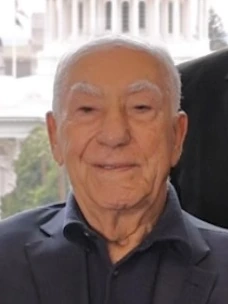
Who is Angelo Tsakopoulos?

Angelo K. Tsakopoulos was born on August 4, 1936, in Rizes, Arcadia, Greece. He immigrated to the United States and built one of the most recognizable Greek-American success stories in California business history. He is the founder and co-chairman/CEO of AKT Development (operating also as AKT Investments, Inc.), a Sacramento-based real estate development company that became one of the largest private land developers in the western United States.
His story is a textbook Greek-diaspora arc: arriving with limited capital, learning the language and the market, and leveraging hard work and community networks into a generational fortune. He's also a major philanthropist, with significant donations to Greek-American institutions, California universities, and Hellenic heritage organizations. That combination of private-sector wealth building and public-facing civic generosity is why his name keeps showing up in Greek-American cultural conversations alongside his financial profile.
One quick disambiguation worth flagging before going further: the Tsakopoulos and Tsakos surnames occasionally get tangled in Greek wealth searches, especially since Greek shipping dynasties like the Tsakos family are prominent in their own right. Angelo K. Tsakopoulos is specifically a Greek-American real estate figure, not a shipping magnate. If you've been reading about Panagiotis Tsakos net worth and landed here, note that these are two distinct individuals from different industries.
The current net worth estimate and what the range actually means
The $600M–$800M range reflects the realities of valuing a private real estate portfolio. AKT Development controls vast tracts of entitled and undeveloped land in California's Central Valley, particularly in the Sacramento region. Land is inherently harder to mark-to-market than publicly traded stock or even a fleet of cargo ships. Valuations shift with zoning decisions, development cycles, interest rates, and regional housing demand, all of which California has experienced in dramatic swings over the past decade.
The floor of the range ($500M) tends to appear in conservative estimates that apply a discount for illiquidity and the long development timelines associated with master-planned communities. The ceiling ($1B+) tends to appear in peak-market assessments or those that factor in the full gross asset value of holdings before debt and carrying costs. For a practical reference figure, $700 million is the most defensible midpoint based on available data through early 2026.
How net worth gets calculated for Greek business leaders like this

Calculating net worth for a private business owner is fundamentally different from looking up a listed company's market cap. For someone like Angelo Tsakopoulos, analysts and database compilers generally work through several asset categories and then subtract estimated liabilities.
- Real estate holdings: assessed parcel values from county records, cross-referenced with comparable sales and development-stage premiums
- Operating company value: a private company like AKT Development is typically valued at a revenue or EBITDA multiple, using disclosed project sizes and pipeline as proxies
- Investment portfolio: any publicly disclosed stock holdings, venture investments, or private equity positions
- Philanthropic vehicles: family foundations hold assets that technically belong to a charitable entity but reflect wealth that was once personal capital
- Debt and liabilities: construction loans, land-carry financing, and corporate debt reduce net worth from gross asset value
The same methodology applies whether you're looking at a Greek-American real estate developer in Sacramento or a shipping executive in Piraeus. The asset categories differ (land vs. vessels), but the framework is consistent. For context, Takis Georgakopoulos's net worth is assembled using a similar multi-asset approach, balancing declared holdings against estimated liabilities to produce a defensible range.
What actually built the fortune: key wealth drivers
AKT Development and California land banking

The core engine of Angelo Tsakopoulos's wealth is AKT Development. The company specializes in acquiring large land parcels, securing entitlements (zoning approvals, environmental clearances, utility access), and then either developing them into master-planned communities or selling entitled land to homebuilders at a significant markup. This model is capital-intensive and slow, but the returns on successfully entitled California land have historically been enormous. Sacramento's growth as a second-tier California city, drawing population and business from the Bay Area, has been particularly favorable for large land holders in the region. News & Review's Natomas land rush coverage reports that Tsakopoulos would profit from approvals and cites an estimated 20% profit pledge to build an arena under an initiative scenario SN&R • The great Natomas land rush.
Political and civic network leverage
Land development at scale in California requires deep political relationships, and Tsakopoulos has cultivated those methodically over decades. His involvement in Democratic Party fundraising and Hellenic-American civic organizations has given him access and influence that many developers of similar scale simply don't have. This isn't just networking for its own sake: in a state where a zoning decision can add or subtract tens of millions of dollars in land value overnight, those relationships have direct financial consequences.
Philanthropy as a wealth signal
Tsakopoulos has made significant donations to institutions including California State University, Sacramento, and various Greek-American heritage organizations. Philanthropy at this scale doesn't reduce net worth estimates as much as one might expect, because meaningful gifts are typically made from income, appreciated assets, or through charitable vehicles that still reflect the overall wealth base. In fact, major public donations often help calibrate the lower bound of a net worth estimate: you generally don't give away eight-figure sums if your total net worth is in the low nine figures.
Where these estimates come from and how reliable they are

There is no single authoritative source for Angelo Tsakopoulos's net worth because, as a private individual running private companies, he has no obligation to publicly disclose his finances. What exists instead is a mosaic of evidence that analysts and wealth trackers piece together. A UC Davis School of Law news item commenting on a Sacramento Bee matter discusses the Tsakopoulos proposal involving transferring 4,000 acres of Conaway Ranch land for wetland habitat in exchange for concessions valued at about $2 million, along with related pledges.
| Source Type | What It Provides | Reliability |
|---|---|---|
| County property records | Assessed values of real estate parcels owned by AKT entities | High for individual parcels, but assessed value often lags market value |
| Business entity filings | Corporate structure, registered agents, subsidiary names | High for structure, low for financial detail |
| Project announcements and permits | Pipeline size, development scale, implied capital deployment | Moderate — announced projects don't always complete on schedule |
| Philanthropic disclosures | Donation amounts to universities and foundations | High for confirmed gifts, useful as a wealth floor indicator |
| Media profiles and rankings | Narrative estimates, sometimes citing industry sources | Variable — ranges from well-sourced to speculative |
| Wealth database aggregators | Compiled estimates synthesizing the above | Moderate — quality depends on update frequency and methodology |
The honest reality is that no two wealth databases will give you exactly the same number for a private real estate developer, and that's not a flaw in the system. It reflects genuine uncertainty about private asset values. What you should trust is a range built from multiple data types, not a single precise figure. This is true across Greek business wealth profiles generally. When I look at someone like Tassos Gianakakos's net worth, the same principle applies: the range is more informative than a specific number, and triangulating across source types gives you the most defensible picture.
Net worth timeline: how the number has moved over the years
Angelo Tsakopoulos's wealth has gone through several distinct phases tied to California real estate cycles and AKT's own development pipeline.
- 1970s–1990s: Foundation building. Tsakopoulos acquired large land positions in the Sacramento region when prices were relatively modest. This era established the asset base that would later generate extraordinary returns as California's population grew.
- 2000–2006: Pre-crisis peak. The California housing boom inflated land values dramatically. Estimates of Tsakopoulos's wealth climbed significantly as entitled land appreciated and development activity accelerated.
- 2007–2012: Housing crisis impact. California land values collapsed, and master-planned community development stalled industry-wide. Private wealth estimates for land-heavy developers fell sharply during this period, though long-term holders with low debt were better insulated than leveraged developers.
- 2013–2019: Recovery and expansion. Sacramento's market recovered, driven partly by Bay Area migration and infrastructure investment. AKT's long-held positions benefited as the region's growth story strengthened.
- 2020–2022: Pandemic-era surge. Remote work accelerated population movement from the Bay Area to Sacramento, creating one of the strongest demand environments for Central Valley land in decades. This period likely pushed net worth estimates toward the upper end of the historical range.
- 2023–2026: Interest rate and market normalization. Rising interest rates cooled California real estate, reducing land values from peak levels. Current estimates reflect this partial correction, which is why the range has widened rather than converging on a higher figure.
These macro swings are not unique to Tsakopoulos. Any Greek-diaspora business figure with concentrated exposure to a single asset class will show similar volatility in net worth estimates. This is something worth understanding before comparing numbers across time periods: a figure from 2021 and a figure from 2024 can look dramatically different without either being wrong for their moment. The same dynamic plays out across the broader Greek business wealth landscape, including figures like Lukas Tsimopoulos, where market timing significantly affects what any snapshot estimate actually captures.
How to verify or update the estimate yourself
If you want to pressure-test the current estimate or track how it changes, here's a practical checklist of what to monitor and where to look.
- Sacramento County and surrounding county assessor records: search for parcels owned by AKT Development, AKT Investments, or related LLCs to get assessed values on known holdings
- California Secretary of State business filings: track active entities associated with the Tsakopoulos name to understand the corporate structure and any new or dissolved subsidiaries
- City and county planning department databases: approved tentative maps, environmental impact reports, and master development agreements will tell you the scale of the active pipeline
- University and foundation 990 filings: Tsakopoulos-associated foundations file public IRS Form 990s that disclose assets, donations, and investment returns
- Business Journal lists: Sacramento Business Journal and similar regional publications periodically publish private company rankings and real estate developer profiles with revenue or asset estimates
- Major project announcements: new development approvals or land sales by AKT entities are often covered by regional business press and reflect current land market conditions
- Macroeconomic indicators: California housing starts, Sacramento median home prices, and 30-year mortgage rates all directly affect the value of a land development portfolio
When estimates change on a database like this one, it's almost always triggered by one of three things: a major transaction becoming public, a significant shift in the underlying asset market, or an updated valuation methodology. If you're checking back periodically, those are the signals to watch for. This is the same approach worth applying to any private wealth figure in the Greek business universe. For reference, net worth profiles like that of Sakis Tanimanidis follow a similar update logic, where career milestones and public disclosures are the primary triggers for revisions.
The bottom line on Angelo Tsakopoulos is this: you're looking at a genuinely wealthy Greek-American who built a real estate empire in California over five decades through a combination of strategic land banking, political access, and long-term patience. The $600M–$800M range is the most defensible current estimate, with $700 million as a reasonable midpoint. The number is private, it fluctuates with California real estate cycles, and anyone citing a precise single figure without a range or methodology note is probably rounding aggressively. That context is what makes the estimate actually useful.
FAQ
Why do net worth estimates for Angelo Tsakopoulos vary so much (for example, $500M vs. $1B)?
Private land values swing with zoning status, entitlement timelines, and interest-rate assumptions. Some trackers model land at discounted “as-is” values (lower), while others estimate full development potential or gross asset value before debt and holding costs (higher).
Does Angelo Tsakopoulos’s net worth estimate include AKT Development debt?
Most methods estimate gross assets (land holdings, entitlements, and business interests) and then subtract estimated liabilities, but debt detail is rarely public. That’s why two databases can use the same asset assumptions and still land at different totals.
What’s the biggest driver of change in Angelo Tsakopoulos’s net worth from year to year?
It’s usually not philanthropy or general “income,” it’s land revaluation tied to development milestones. Entitlement approvals, completed infrastructure, and active sales of entitled parcels can move valuation materially, while stalled projects may keep estimates flat or lower.
How can I tell whether a reported figure is using “enterprise value” style logic or “personal net worth” logic?
Look for whether the estimate is tied to AKT Development’s overall asset pool and then adjusted to personal ownership. If the figure seems to treat the company as entirely his personally, it may be overcounting, since owners can hold varying effective stakes and other interests.
If he donates large amounts, why doesn’t that drastically reduce net worth estimates immediately?
Large gifts often come from income, appreciated assets, or structured charitable vehicles rather than straight cash subtraction that reduces total wealth instantly. Also, valuation updates for private assets usually lag behind donation timing.
Is the $700 million midpoint a reliable “target,” or should I always focus on the full range?
The midpoint is best treated as a reference point, not a target. In private real estate, the plausible uncertainty is large enough that the full range is the more reliable reading, especially when zoning or sales momentum changes.
Can philanthropy and political access inflate net worth estimates indirectly?
They can, but not in a direct “donations add money” way. If civic influence leads to faster entitlements or more favorable development opportunities, that affects the asset value assumptions behind the net worth range.
How do I avoid confusion with the Tsakos shipping family when searching Angelo Tsakopoulos net worth?
Check the industry and location. Angelo K. Tsakopoulos is a Greek-American real estate developer associated with Sacramento-area development, while the shipping-related Tsakos family operates in maritime business circles in Greece.
What information would most likely confirm or update Angelo Tsakopoulos’s net worth estimate?
Public signals like major parcel sales, recorded transactions involving large land blocks, significant financing announcements, or measurable entitlement breakthroughs can trigger methodology recalculations and shift the range more than generic media mentions.
Why can two legitimate databases disagree even if they both claim to use the same methodology?
They may use different assumptions for liquidation discounts, holding periods, how to value “undeveloped but entitled” land, and how to estimate personal versus company ownership. Small assumption differences can create large dollar gaps at the hundred-million scale.
Next Article
Goulandris Family Net Worth: Estimated Range and Asset Breakdown
Estimate of Goulandris family net worth with asset and company breakdown, method to compare conflicting figures, and ver