
"Onassis net worth" can mean three very different things depending on what you're actually looking for: Aristotle Onassis the man, the Onassis family and its heirs, or the Onassis Foundation and its endowment. The numbers attached to each are different, the sources are different, and the level of transparency is very different. This article breaks all three down clearly, covers the historical peak versus what actually survived at death, and explains why the figures you'll find online rarely agree with each other.
Onassis Net Worth: Aristotle, Family, and Foundation Estimates

Dimitri Papamichael
27 Mar 2026
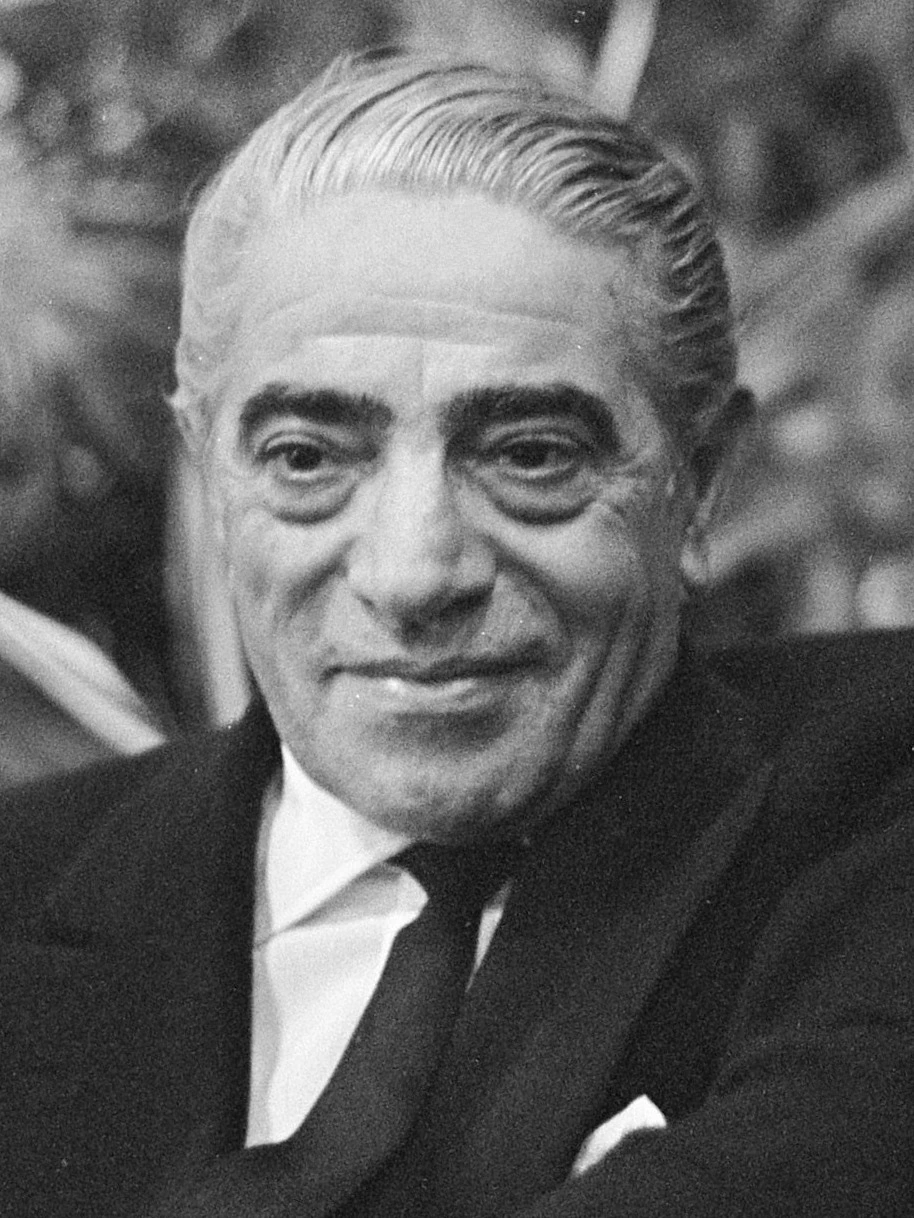
Who Aristotle Onassis was and what "net worth" actually means for him

Aristotle Socrates Onassis (1906–1975) was a Greek-Argentine shipping magnate who built one of the largest private shipping fleets in the world. He was also a shareholder in Olympic Airways and held real estate and investment positions across multiple continents. His wealth was not a simple salary or a stock portfolio you could look up on an exchange. It was a layered structure of ships, securities, cash, real estate interests, and privately held company stakes, which is exactly why you'll see wildly different numbers attached to his name.
When people talk about Onassis's "net worth," they usually mean one of three things: gross assets (everything he owned, before debts), net estate value (assets minus liabilities), or the subset of holdings that actually passed to heirs and the foundation. Those three numbers can be hundreds of millions of dollars apart, so it matters which one a source is using. Aristotle Onassis's full financial picture is worth understanding in that layered context before you try to compare figures.
What the Onassis estate was actually worth at death
Onassis died on March 15, 1975, in France. The most detailed contemporary accounting of his estate puts his gross assets at more than $1 billion, which included approximately $426 million in cash and securities, more than 50 ships, and a half-interest in New York's Olympic Tower. Against that, he carried outstanding liabilities of around $421 million. Run the arithmetic and you get a net estate value in the range of $500 million to $600 million, depending on how you value the ships and real estate at the time.
That gap between the gross headline ($1 billion-plus) and the net estate (~$500 million) is the reason you see both figures quoted in different places. Neither is technically wrong; they're just measuring different things. The gross number is more dramatic and gets repeated more often. The net figure is the one that actually mattered for inheritance purposes.
For a closer look at the figures specifically tied to his final years, Onassis's net worth in 1975 breaks down the estate-era valuation in more detail.
The Onassis family net worth: assets, heirs, and what's included
The family wealth story after Aristotle is essentially a two-generation transfer. His daughter Christina Onassis inherited roughly 55% of the estate (the other substantial portion went to the foundation he established in memory of his son Alexander). Christina's fortune was later estimated at around $250 million, a figure that reflects both what she inherited and the performance of those assets through the late 1970s and 1980s, when shipping markets were volatile.
Christina died in 1988, leaving her sole heir, Athina Onassis, as the last direct descendant of Aristotle Onassis. Athina has been widely described as a billionaire heiress in the popular press, but a Forbes analysis published in 2003 challenged that framing directly, noting that the shipping-fleet assets underpinning the fortune had been declining in value for years before Aristotle's death. The true extent of Athina's wealth remains publicly unknown; credible reporting consistently acknowledges that no verified figure exists.
When you see "Onassis family net worth" cited as a single number, be skeptical. The family wealth line runs through Christina to Athina and is not consolidated or publicly reported. Shipping assets are notoriously difficult to value in real time, and the family's holdings have been managed privately across multiple jurisdictions.
Onassis Foundation net worth and what the foundation actually controls

The foundation created under Onassis's will is formally known as the Alexander S. Onassis Public Benefit Foundation, named in memory of his son. It is a private foundation headquartered in Vaduz, Liechtenstein, which is a key structural detail. The Liechtenstein entity is the core legal body holding and managing the endowment-style assets. Separately, there are related organizations and operational arms in Greece and the United States that run the cultural programs, scholarships, prizes, and lecture series the foundation is known for.
The foundation has been operating since 1978, funding scholarships, the Onassis Prizes, cultural programming, and a significant library and arts presence in Athens. Its activities are funded exclusively from the profits of its own institutionally independent asset base. But here is the transparency problem: the foundation does not publish a "net worth" figure in any accessible public document. Reporting from 2018 described the true value of the foundation's assets as covered by a "veil of mystery," which is not hyperbole; it reflects genuine opacity in the financial disclosures.
What we do know from older financial reporting (UPI, 2000) is that the bulk of the foundation's assets were held in securities and other investment holdings, not just shipping interests. Given the endowment-like structure and the decades of compounding, estimates of foundation assets range widely, but no credible published figure ties down an exact number. If you need to verify the legal entity itself for research purposes, the foundation is registered in Greece under G.E.MI. no. 1220017010000, and a Bloomberg LEI listing exists for the Alexander S. Onassis Public Benefit Foundation as a starting point for entity identification.
What Onassis net worth looks like in today's dollars
Adjusting 1975 dollars to 2026 purchasing power, a net estate of approximately $500 million translates to roughly $3 billion to $3.5 billion in today's money, depending on which inflation index you use. The gross assets of $1 billion-plus in 1975 would be somewhere in the range of $6 billion to $7 billion in 2026 terms. These are inflation adjustments only; they do not reflect actual asset performance, which makes them useful for perspective but not as a measure of real current value.
The actual current value of the Onassis wealth ecosystem, meaning the foundation assets plus whatever Athina Onassis controls privately, is genuinely unknowable from public data. Shipping company valuations swing with market cycles. Private holdings in securities and real estate are not disclosed. And the foundation deliberately operates without publishing an endowment figure. Any specific current number you see attributed to "Onassis net worth today" is an estimate, and most of them are not grounded in verified primary data.
Why the numbers you find online are so different
The conflicting figures come down to a few consistent sources of disagreement. Understanding them lets you evaluate any estimate you encounter.
| Source of variation | What it affects | Typical result |
|---|---|---|
| Gross assets vs. net estate | Peak vs. inheritable value | ~$1B gross vs. ~$500M net at 1975 death |
| Inflation adjustment method | Historical-to-current conversion | Ranges from ~$3B to ~$7B in 2026 terms |
| Shipping fleet valuation timing | Core asset estimate | Fleet values dropped significantly post-1973 oil crisis |
| Foundation vs. family split | Who controls what | 55% to heirs, remainder to foundation (approximate) |
| Jurisdiction of legal entities | Reporting transparency | Liechtenstein foundation not publicly audited |
| Heir wealth (Athina) transparency | Current family wealth | No verified public figure exists |
One detail worth noting specifically: the oil crisis of 1973 hit tanker-heavy shipping fleets hard. The value of Onassis's fleet was already under pressure before he died in 1975, which is why Forbes's 2003 analysis questioned the billionaire framing for Athina's inheritance. A fleet worth X in 1970 was worth considerably less by 1975, and that downward revaluation is not always reflected in figures that simply cite "peak" Onassis wealth.
A quick comparison of the three "Onassis net worth" figures

| Reference point | Estimated value (original) | Estimated value (2026 dollars) | Confidence level |
|---|---|---|---|
| Aristotle Onassis gross assets (1975) | $1 billion+ | ~$6–7 billion | Moderate (sourced from estate reporting) |
| Aristotle Onassis net estate (1975) | ~$500–600 million | ~$3–3.5 billion | Moderate (assets minus ~$421M liabilities) |
| Christina Onassis personal fortune | ~$250 million (1980s) | ~$700M–$1B in 2026 terms | Low-moderate (widely cited, not verified) |
| Athina Onassis current wealth | Unknown | Unknown | Very low (no public data) |
| Onassis Foundation assets | Unknown | Unknown | Very low (not publicly disclosed) |
How to find credible sources and verify the estimates
For Aristotle Onassis specifically, the most substantiated estate-era figures come from the Vanity Fair 2005 profile "The Last Onassis," which is the most detailed breakdown of the 1975 estate arithmetic available in mainstream journalism. For the foundation's legal identity, the Bloomberg LEI registry and the Greek GEMI company registry (no. 1220017010000) give you the entity-level starting point to trace financial filings, though full endowment figures are not publicly available.
For heir wealth, Forbes's 2003 investigation is the most methodologically honest assessment of Athina's fortune, precisely because it questions rather than repeats the billionaire claim. Wikipedia entries for Aristotle, Christina, and Athina Onassis are reasonable starting points but should be cross-referenced; Christina's $250 million figure, for example, appears widely but originates in period reporting that is difficult to independently verify today.
The Onassis Foundation's own website (onassis.org) is useful for understanding the scope and programming of the foundation but does not disclose financial figures. For anyone trying to do deeper research on the foundation's asset base, the Liechtenstein registration is the relevant legal jurisdiction, not Greece, even though the foundation has a significant operational presence in Athens.
If you want a realistic research approach, treat the 1975 net estate of approximately $500 million as the most defensible baseline figure for Aristotle Onassis personally. Adjust for inflation to get a modern purchasing-power equivalent, but flag clearly that actual current wealth held by the family or the foundation is not publicly verifiable. Any source claiming a precise current number for either the family or the foundation is extrapolating, not reporting confirmed data.
FAQ
When people say “onassis net worth today,” which number are they usually using?
No. “Onassis net worth” is ambiguous, because some sources quote gross assets, others quote assets minus liabilities, and others mix in holdings that were managed by the foundation rather than passed to heirs. If you want something comparable, insist on the same definition (gross, net estate, or heir share) and the valuation date.
Is Aristotle Onassis’s net estate number the same thing as Athina’s inheritance fortune?
The article’s baseline for Aristotle personally is the 1975 net estate value after liabilities, roughly $500 million to $600 million. That is not the same as the later value attributed to Christina or Athina, since inheritance fractions and asset performance through the late 1970s and 1980s can shift outcomes substantially.
Why do different reports produce different net worth totals even for the same year (like 1975)?
Not reliably. Even for historic figures, shipping and real estate are valuation-sensitive, and the arithmetic depends on how ships and interests were marked at the time. A “net estate” figure also depends on which liabilities are included and how privately held stakes are valued.
How can I tell if a “current net worth” claim is real valuation versus just inflation math?
Look for whether the estimate is “inflation-adjusted” from a historical baseline or whether it claims a current market valuation. Inflation adjustment only changes purchasing power, it does not imply the assets are still worth the same amount. If a source presents an exact current number without explaining the valuation method, treat it as an extrapolation.
Why isn’t there a single verified “Alexander S. Onassis Foundation net worth” figure you can look up?
Because the foundation does not publicly disclose an endowment-style “net worth” figure in accessible documents, any precise foundation asset number you see is usually an estimate built from older reporting, partial filings, or assumptions. The safest approach is to treat the foundation’s financial size as unknown unless primary financial statements are clearly referenced.
Is Athina Onassis’s wealth definitely “billionaire level,” or does it depend on assumptions?
Yes, Athina is often described as a billionaire, but the article notes credible challenges that question the billionaire framing due to declining fleet values before Aristotle died. The key takeaway is that “billionaire” is a threshold claim that can flip depending on valuation of the underlying shipping assets and their timing.
Where should I look in terms of jurisdiction when researching the foundation’s assets, Greece or Liechtenstein?
For research, start by separating entity identification from financial verification. The article highlights registrations such as Greek GEMI (for the foundation in Greece) and the fact that the Liechtenstein entity is the core holding body. Don’t assume that where the programs operate is where the endowment is legally managed.
What is the most common mistake people make when comparing Onassis net worth numbers from different websites?
A common mistake is averaging or merging multiple “net worth” numbers into one headline figure. For example, a source might cite gross estate value plus heir value plus foundation value as if they were additive. Instead, keep them segmented by definition and beneficiary (estate, heir share, or foundation holdings).
What questions should I ask before trusting an Onassis net worth estimate?
Use a “valuation date checklist.” Ask: what year is the figure for, is it gross or net, does it list liabilities, and how are ship values handled. If the source does not answer these, you cannot reliably compare it to the article’s 1975 net estate baseline.
Next Article
Stavros Halkias Net Worth Estimate: Income, Assets, and How It’s Calculated
Estimate of Stavros Halkias net worth based on public comedy and media income, assets, and valuation methods.