
Stavros Merjos' net worth is estimated in the range of $20 million to $50 million as of March 2026, based on his decades-long leadership of a video production company that was pulling in $65 million in annual revenue by the mid-1990s. That figure carries real uncertainty, because Merjos has never been a celebrity in the tabloid sense, and there are no confirmed public disclosures of his personal assets. What follows is a transparent breakdown of how that estimate is built, what drives the range, and how you can pressure-test it yourself.
Stavros Merjos Net Worth Estimate: Salary, Assets, Range

Dimitri Papamichael
27 Mar 2026
Who Stavros Merjos is (and why disambiguation matters)
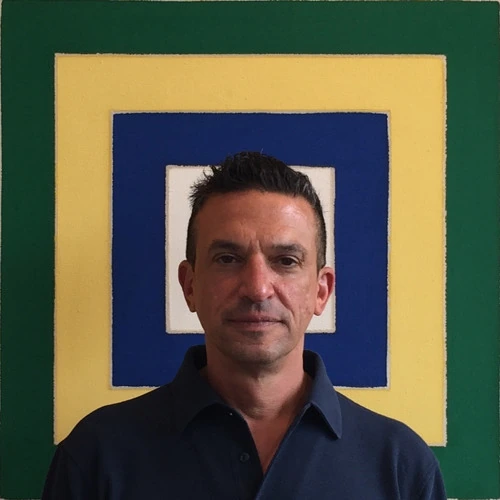
Stavros Merjos is a Greek-American entrepreneur and media executive based in Los Angeles and Beverly Hills. He is best known as the founder of HSI Productions (originally filed as HSI), a commercial and music video production company he started in 1986 in Los Angeles. World Biographical Encyclopedia (Prabook) lists Stavros Peter Merjos as blank" rel="noopener noreferrer">president and chief executive officer of HSI Productions Inc. since 1986. By the late 1990s, HSI had grown into one of the most commercially successful independent production houses in the U.S., working with major record labels and advertising agencies. Public records also name him as president of Mars Media, Inc., a video-production services company, and as the principal behind Stavros Merjos Limited, with a registered address at 479 North Rodeo Drive, Beverly Hills, CA 90210. The BBB Business Profile for Mars Media, Inc. lists Stavros Merjos as President and states the business started on 7/24/1996, along with alternate names including HSI Productions, Inc. and Venus Entertainment.
The disambiguation point worth flagging: if you are searching broadly for Greeks named Stavros Merjos, you are almost certainly landing on this same person. He is not a household name in Greek entertainment or politics, so there is little risk of confusing him with another public figure. He sits squarely in the Greek diaspora business category, specifically the Los Angeles creative-industry branch of that community, rather than in shipping or Athens-based commerce. Think of him alongside other diaspora Greeks who built quiet but substantial businesses in U.S. media and services, rather than the billionaire shipping dynasties.
What "net worth" actually means, and how estimates like this one are built

Net worth is simply assets minus liabilities: what you own minus what you owe. For a private business owner like Merjos, those assets include equity in his companies, real estate, liquid investments, and any other holdings. Liabilities would cover mortgages, business loans, or other debts. The challenge with any private individual is that none of these numbers are publicly filed the way a listed company's financials would be.
Estimating net worth for someone like Merjos relies on a chain of inferences. You start with known revenue figures or company valuations, apply industry-standard profit margins, estimate ownership stake and any distributions over time, then layer in what can be inferred about assets (like a Beverly Hills address on Rodeo Drive). Each step introduces a margin of error. That is why you will always see a range rather than a single figure in any honest estimate, and it is why you should treat any single number you find online with healthy skepticism, including this one.
Where Stavros Merjos' wealth likely comes from
The primary and best-documented source of Merjos' wealth is his founding and ownership stake in HSI Productions. A 1997 Los Angeles Times profile reported that the company generated $6 million in revenue in its founding year of 1986, growing to $65 million by 1996, with a projection of $80 million for 1997. That is a more than tenfold revenue increase over roughly a decade, which signals strong retained equity value in the business.
Beyond HSI, his involvement with Mars Media, Inc. and the operating entity Stavros Merjos Limited suggests he has maintained multiple business interests in media and production services. A Beverly Hills address on Rodeo Drive is not a cheap operating base, which itself signals the scale at which these businesses have been run. While we do not have confirmed data on real estate holdings, it would be typical for a California-based executive with this revenue history to hold significant property equity, particularly given the trajectory of Los Angeles real estate values from the late 1980s onward.
- Equity in HSI Productions, founded 1986, reaching $65M+ in annual revenue by mid-1990s
- Ownership or executive stake in Mars Media, Inc. (video production services)
- Operating income from Stavros Merjos Limited, Beverly Hills
- Likely real estate holdings in the Los Angeles/Beverly Hills market
- Investment portfolio accumulated over 30+ years of business operation (estimated, not confirmed)
The net worth estimate: ranges, assumptions, and honest uncertainty

Here is how the math works in broad strokes. A production company running $65 to $80 million in annual revenue in the late 1990s, in a sector with typical EBITDA margins of 10 to 20 percent, would generate $6.5 to $16 million in annual operating profit at the peak. Even if Merjos took a conservative personal distribution of 30 to 50 percent of that profit over the years, and even accounting for business reinvestment, overheads, and lean years, accumulated personal wealth over three-plus decades would comfortably reach into the tens of millions.
| Scenario | Key Assumption | Estimated Net Worth Range |
|---|---|---|
| Conservative | Lower margins, significant business reinvestment, modest real estate | $15M – $25M |
| Mid-range (most likely) | Moderate distributions, solid LA real estate gains, multiple business interests | $25M – $40M |
| Optimistic | High ownership stake retained, strong asset appreciation, diversified investments | $40M – $60M+ |
The most defensible single estimate is somewhere in the $25 to $40 million range, using the mid-range assumptions. The biggest unknowns that could shift this significantly are: how much of HSI he sold or retained over the years, whether the company maintained its late-1990s revenue trajectory into the 2000s and 2010s, and the extent of any real estate or financial investments outside the business. If HSI was sold or took on major outside investment, his personal liquidity could be substantially higher than the operating-income model suggests.
How his wealth has likely grown over time
The trajectory from 1986 to 1997 is the most clearly documented phase: a startup with $6 million in revenue scaling to $65 million in eleven years. That kind of growth in a founder-owned business typically builds substantial equity value that far outpaces salary or distributions alone. The late 1990s were also a boom period for music video and commercial production, driven by MTV's peak influence and the advertising industry's heavy spend on video content.
From the early 2000s onward, the music video industry contracted significantly as the economics of the music business shifted. Companies like HSI had to adapt toward advertising, branded content, and digital media. How well Merjos navigated that transition matters enormously for the current estimate. The fact that he maintained active company registrations (Mars Media, Stavros Merjos Limited) with a premium Beverly Hills address into the 2020s suggests the business did not collapse, but the growth rate almost certainly slowed from that late-1990s peak. Real estate in Los Angeles has been a significant wealth multiplier for anyone who held property through the 2000s to 2020s, which likely added substantially to his balance sheet regardless of how the production business performed.
For context, Greek diaspora entrepreneurs who built media and services businesses in Los Angeles during this same era often quietly accumulated seven-figure to low eight-figure personal fortunes without ever becoming public figures. Merjos appears to fit that profile well. Andros Stakis is another example of a Greek diaspora businessperson whose accumulated wealth from a services-focused enterprise was built methodically over decades rather than through a single high-profile event.
How to verify this estimate today

Because Merjos is a private individual and not a public company executive, there is no single source that will give you a confirmed number. But there are concrete steps you can take to pressure-test any figure you find, including the one in this article.
- Search California Secretary of State business records for HSI Productions, Mars Media Inc., and Stavros Merjos Limited to check active/inactive status and any filed financials or amendments.
- Check the BBB Business Profile for Mars Media, Inc. to see current company size, revenue bands, and years in business.
- Search Los Angeles County property records (assessor.lacounty.gov) for properties associated with his name or known business addresses.
- Use PACER (federal court records) to check for any litigation involving HSI, Mars Media, or Merjos personally, which can sometimes surface asset disclosures.
- Look for any interviews, trade press features, or industry awards from the production world (Adweek, Shoot magazine, Ad Age) that might reference company revenue or valuation.
- Cross-reference with celebrity and wealth databases like Celebrity Net Worth or Wealthy Gorilla, but treat those figures as starting points for research rather than confirmed data.
One practical note: if you find a single number cited across multiple websites without a named source, it is almost always one site copying another. The original estimate may have been no more rigorous than what you are reading here. The difference is that this article tells you how the number was built. Net worth estimates for private individuals should always be refreshed when new career or business information becomes available, roughly every one to two years at minimum, or whenever a major business event (sale, merger, new venture) is reported.
Putting it all together
Stavros Merjos is a quietly successful Greek-American entrepreneur whose wealth is rooted in building one of Los Angeles' notable independent production companies from nothing in 1986 to $65 million in annual revenue by the mid-1990s. The most grounded estimate of his net worth as of March 2026 sits in the $25 to $40 million range, with a plausible upside toward $60 million if business exits, asset appreciation, or investment returns have been favorable. If you are trying to pin down Stavros net worth specifically, this range and the underlying assumptions are a good place to start. He is not a billionaire, and he is not a minor figure either. He represents exactly the kind of understated Greek diaspora business success that rarely makes headlines but represents genuine, lasting wealth built through entrepreneurship in the creative industries. If you want to dig deeper into similar profiles, Andros Georgiou's net worth offers another useful reference point for how Greek diaspora figures in entertainment and media build and accumulate wealth over long careers.
FAQ
Why is there such a wide net worth range for Stavros Merjos, $20 million to $50 million, instead of a single number?
For private owners, the inputs that drive net worth, equity value in the operating companies, ownership stake changes, and personal distributions, are not reliably disclosed. Small differences in assumed ownership percentage or whether revenue stayed strong into the 2000s can shift equity value by tens of millions, so a range is the most defensible approach.
Could Stavros Merjos have much higher net worth than the $60 million upside mentioned?
It is possible but requires at least one major wealth event that the article does not confirm, such as selling HSI at a high multiple, retaining equity through an eventual buyout, or earning substantial returns from non-media investments. Without evidence of an exit, large outside investment, or property purchased very early and held long term, going far above the upside would be speculative.
How much does salary versus company ownership matter in this estimate?
For founder-led production businesses, ownership value usually dominates net worth more than salary. If Merjos primarily built equity in HSI and kept or sold equity gradually, his net worth would track business valuation and retained profit, not his personal payroll alone.
What if HSI Productions stopped growing after the late 1990s, does that automatically reduce net worth a lot?
Not automatically. Even if revenue slowed, accumulated equity from earlier peak years can remain. The bigger question is whether the business required heavy dilution, took on large debt, or experienced a downturn that eroded asset value. Without debt and exit details, you typically adjust by changing the assumed profit and retention duration, not by assuming immediate collapse.
How should I treat net worth numbers I see repeated across multiple sites online?
If multiple sites cite the same figure without naming primary data, it is often a reprint rather than a true source. A practical check is to look for at least one of the following: a documented sale, a stated ownership stake, disclosed financial filings, or a named analyst with clear assumptions. If none exist, treat it as an unverified estimate.
What are the most important “pressure-test” questions I can ask to validate any net worth claim for Merjos?
Ask whether he sold any stake in HSI (and when), whether he remained a controlling owner, whether major debt was taken on or repaid, and whether he held meaningful real estate or other investments outside the operating business. Each of those changes either equity value or personal asset base directly.
Could real estate be the main driver of the estimate, given the Beverly Hills address mentioned?
It could be meaningful, but the address alone does not confirm ownership. To treat it as a driver, you would need evidence that he purchased property in that area, held it long enough to benefit from appreciation, and owns it outright or with limited leverage. Otherwise, the address may just reflect office or operational use.
Does “net worth” here mean liquid cash, or total wealth including illiquid business equity?
It means total assets minus liabilities, which for a private executive typically includes illiquid items like company equity, not just cash. That matters because someone can have high net worth on paper while having limited liquidity if a large portion of wealth is tied up in an operating company.
How often should Stavros Merjos net worth estimates be updated, and what events would trigger a re-forecast?
The article suggests refreshing at least every one to two years, and more urgently after major business events. The practical triggers are a reported sale, merger, major new venture, bankruptcy or debt refinancing, significant property transactions, or public filings that clarify ownership.
Is the estimate consistent with a non-billionaire outcome, or could he still reach billionaire-level wealth?
Based on the article’s framework and typical valuation logic, billionaire-level outcomes would require either extremely high retained equity, a very large successful exit, or unusually valuable outside investments. With no confirmed disclosures supporting those conditions, the estimate remains much more consistent with a seven-figure to low eight-figure range than with nine-figure wealth.
Next Article
Andros Georgiou Net Worth: How It’s Estimated and Verified
Fact-based estimate of Andros Georgiou net worth, showing inputs, source checks, and why figures differ.